

Inside Swiggy’s ₹10,000 Crore Profit Plan: How Toing and Instamart Are Driving the 5-Year Roadmap

For years, food delivery and quick-commerce platforms in India operated on a simple strategy: spend heavily on discounts, run massive advertising campaigns, and absorb losses in pursuit of rapid order growth.
Now, the era of unbridled cash burn is giving way to strict financial discipline.
At its Capital Markets Day 2026 presentation, Swiggy Limited unveiled an ambitious five-year roadmap. The Bengaluru-based delivery giant set a firm financial goal: reaching ₹10,000 crore in annual adjusted operating profit (EBITDA) by Fiscal Year 2031 (FY31).
To hit this milestone, Swiggy plans to more than triple its total Gross Order Value (GOV) from ₹67,734 crore in FY26 to ₹2.5 lakh crore by FY31.
Here is a breakdown of how Swiggy plans to turn loss-making dark stores into profit engines, what its new affordability platform "Toing" is all about, and how the company aims to deliver long-term value.
Where Will the ₹10,000 Crore Profit Come From?
Swiggy’s ₹10,000 crore operating profit target is divided across its three main business arms:
Food Delivery: Target of ₹5,000 Crore Profit
Food delivery remains Swiggy’s cash cow. After posting over ₹1,000 crore in operating profit in FY26, Swiggy expects this segment to generate ₹5,000 crore by FY31.
To achieve this 5-fold expansion, Swiggy is focusing heavily on solving two major industry challenges: order frequency and affordability. Roughly 70% of Swiggy’s current user base orders less than once a month. By making food ordering more affordable, Swiggy aims to convert occasional buyers into weekly repeat customers.
Instamart (Quick Commerce): Target of ₹4,000 Crore Profit
This is the biggest turnaround story in Swiggy's roadmap. Instamart lost over ₹3,500 crore in FY26 due to aggressive dark-store expansion.
However, Instamart hit contribution margin breakeven in May 2026. Swiggy projects that Instamart’s total order value will expand from ₹28,000 crore to over ₹1.5 lakh crore by FY31, swinging the quick-commerce unit into a massive ₹4,000 crore profit engine.
Dineout (Dining Out): Target of ₹1,000 Crore Profit
Swiggy’s out-of-home dining platform, Dineout, which connects consumers with over 52,000 restaurant partners across 75 cities, is projected to grow five-fold—generating ₹1,000 crore in profit on a order value of ₹20,000 to ₹25,000 crore.
What Is "Toing" and How Will It Drive Food Delivery Growth?
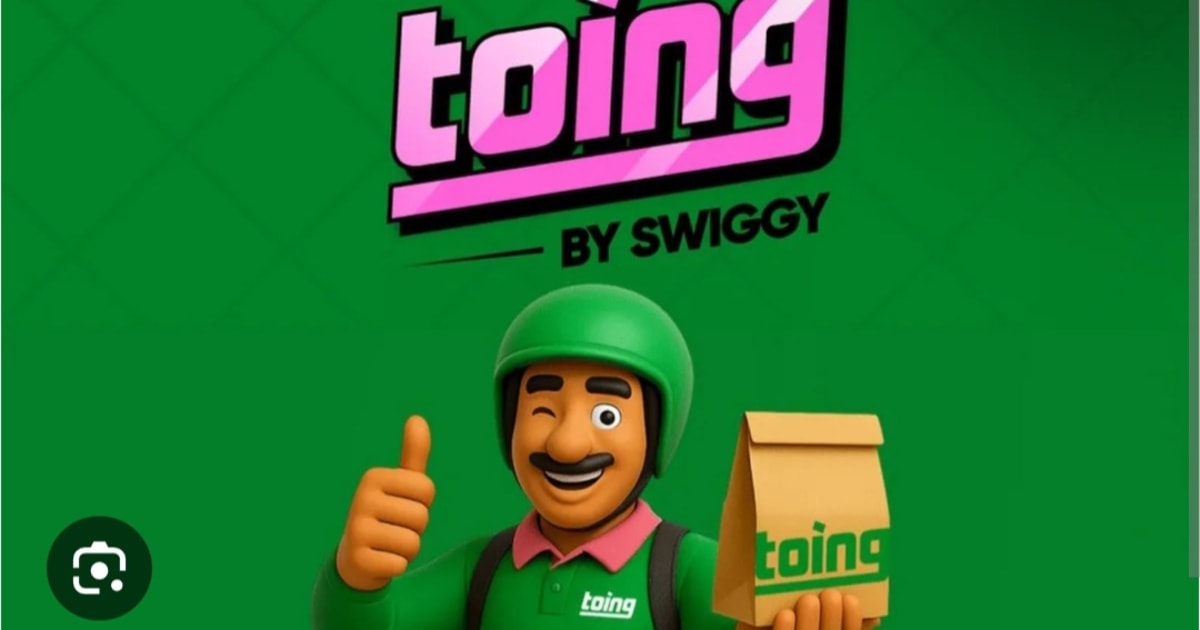
One of the most interesting announcements during Swiggy's capital markets presentation was its strategic emphasis on Toing, a new affordability-led offering aimed at budget-conscious consumers and Gen Z users.
In India's food services market, millions of potential customers find traditional delivery fees and restaurant markups too expensive for daily meals. Through Toing and related affordability initiatives, Swiggy is introducing:
Lower Delivery Distances and Single-Serve Meals: Pairing neighborhood kitchens with optimized delivery routes to offer low-cost meal combinations under ₹100 to ₹150.
Targeting College Students and Young Workers: Creating a dedicated, value-focused app experience designed specifically for younger cohorts who order frequently but have strict daily meal budgets.
Denser Restaurant Networks: Helping local eateries prepare standardized, high-volume items that can be fulfilled rapidly at lower operational costs.
By unlocking this budget tier, Swiggy expects its overall food delivery order value to grow 2.5x to 3.5x over the next five years.
The Turnaround Mechanics of Instamart: From Dark Stores to Profits
Quick commerce has drawn significant skepticism from public market investors due to high dark-store rents, rider costs, and inventory wastage. Swiggy explained how Instamart plans to achieve its ₹4,000 crore profit turnaround:
Tripling the Active User Base
Instamart plans to expand its monthly active transacting users from 14 million to over 40 million by FY31, while increasing average order frequency and basket sizes.
Higher Revenue Per Dark Store
Swiggy operates over 1,200 dark stores across 130+ cities. Over 45% of these stores are already contribution-margin positive, with major hubs like Bengaluru operating profitably. Swiggy plans to increase annual sales per store from ₹42 crore to ₹48 crore through better inventory planning and automated sorting.
Shifting to a Direct Inventory Model (1P)
Swiggy is adjusting its corporate structure to cap foreign shareholding at 49.5%. This regulatory move allows Instamart to transition to a First-Party (1P) inventory model, where Swiggy directly buys and manages goods rather than acting solely as a third-party marketplace. Owning the inventory allows Instamart to negotiate better bulk pricing directly from brands, unlocking higher profit margins per order.
Strong Balance Sheet: ₹14,400 Crore in Cash Cushion
Unlike many global tech platforms forced into distress sales due to funding shortages, Swiggy enters this 5-year growth phase from a position of financial strength.
Zero Debt: The company remains completely debt-free.
Massive Cash Reserves: Swiggy holds ₹14,400 crore in cash reserves, providing ample runway to fund dark-store upgrades, technology infrastructure, and rider network expansion without needing fresh equity dilution.
Path to Positive Earnings Per Share (EPS): Swiggy projects its earnings per share to move from a loss of -₹16 in FY26 to a positive profit of +₹30 to ₹33 per share by FY31.
The Bottom Line
Swiggy’s five-year plan signals a major maturing of India’s internet economy.
The era of burning cash just to show order volume is officially over. By combining affordable daily food delivery through platforms like Toing with profitable quick-commerce operations via Instamart, Swiggy is trying to prove that internet convenience in India can be both widely affordable for the common person and highly profitable for shareholders.

Nikunjj Jhawar is a Chartered Accountant (CA) and Chartered Financial Analyst (CFA) with nearly two decades of experience in the financial services industry. Having worked with global institutions such as HSBC and Credit Suisse in investment-related roles, he brings deep expertise in finance and markets. He is the Founder of mangopeoplenews.com, where he focuses on making complex topics in finance, markets and business accessible and relevant to everyday readers.


