Blinkit vs Zepto: Why Busy Stores Don't Always Mean Bigger Profits In Quick Commerce

India's quick commerce industry has become one of the fiercest battlegrounds in the country's startup ecosystem. Companies are racing to promise grocery deliveries in as little as 10 minutes, opening thousands of dark stores and investing billions of rupees to capture customers before rivals do.
At first glance, success appears simple: more stores, more orders and higher sales should naturally translate into larger profits.But the reality is far more complicated.
Recent financial trends suggest that Blinkit, despite intense competition from Zepto, continues to outperform on several profitability metrics. The reason lies not in how many orders it delivers, but in how efficiently it converts those orders into sustainable earnings.
The quick commerce battle is no longer just about speed. It has become a contest of operational efficiency, customer economics and disciplined execution.
Busy Stores Don't Always Generate Better Returns
One common misconception in retail is that stores with the highest sales automatically create the greatest profits.
In reality, profitability depends on far more than revenue. A quick commerce company must balance several moving parts Delivery costs, Warehouse expenses, Employee productivity, Inventory management, Marketing spend, Customer acquisition costs, Average order value and Product mix.
A dark store processing a large number of orders can still lose money if operating expenses grow even faster.
Conversely, a store with slightly lower sales may generate healthier profits through better cost control and stronger unit economics.
This distinction is becoming increasingly important as investors shift their focus from rapid expansion to sustainable profitability.
Blinkit's Strategy Has Evolved Beyond Growth At Any Cost
During the early years of quick commerce, companies prioritised customer acquisition. Heavy discounts, free deliveries and aggressive marketing campaigns became the norm.
While this approach helped attract millions of users, it also created enormous cash burn. Blinkit has gradually shifted away from this model.
Instead of relying solely on discounts, the company has increasingly focused on improving operational efficiency. Some of its key priorities include Better inventory planning, Higher order density, Improved delivery routing, Larger basket sizes, Greater contribution from high-margin products and Better utilisation of dark stores.
These improvements may appear incremental individually, but together they significantly strengthen overall profitability.
Why Unit Economics Matter More Than Gross Merchandise Value
For years, startups proudly highlighted Gross Merchandise Value (GMV) as their primary growth metric. While GMV indicates the total value of goods sold, it says very little about how much money a company actually earns.
Investors today pay much closer attention to unit economics. They want to know:
How much profit is generated per order?
What does it cost to acquire a customer?
How frequently do customers return?
How quickly does each dark store break even?
How much contribution margin remains after fulfilment costs?
Strong unit economics often prove more valuable than rapid GMV growth because they demonstrate that a business model can eventually become self-sustaining.
The Dark Store Network Is Becoming A Competitive Advantage
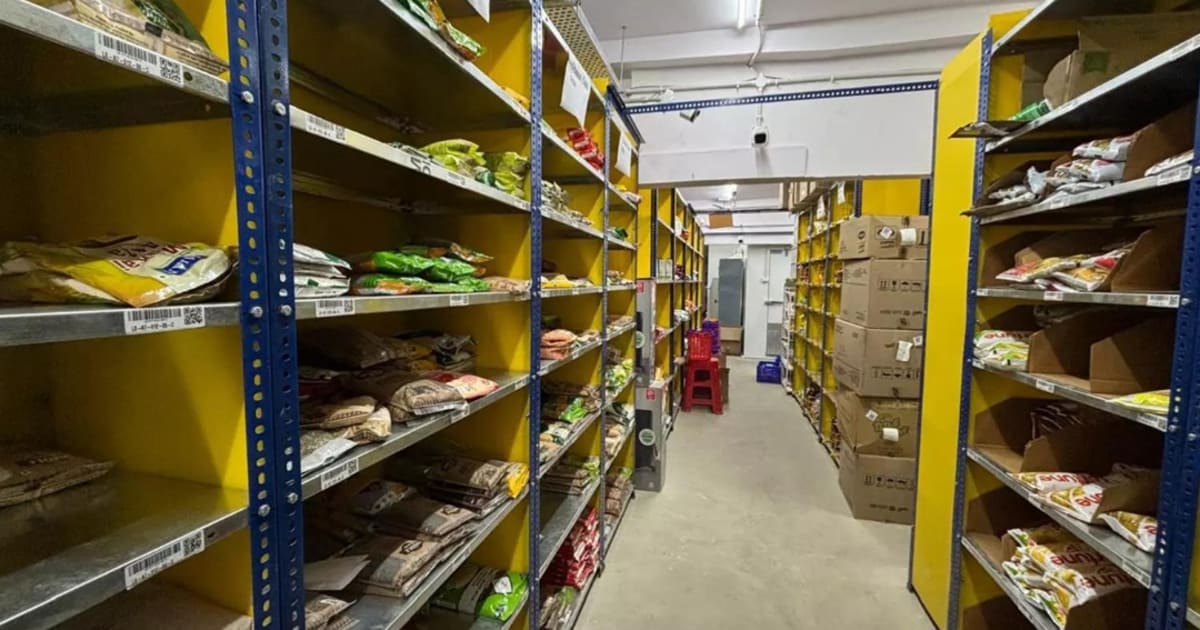
Dark stores are the backbone of quick commerce. Unlike traditional supermarkets, these facilities are designed exclusively for online order fulfilment. Their location, inventory mix and operational efficiency directly influence delivery times and profitability.
Blinkit has steadily refined its network by improving inventory forecasting and increasing order density around each store. Higher utilisation means fixed costs are spread across more orders, improving margins over time.
Zepto, meanwhile, continues expanding aggressively to strengthen market share.
While rapid expansion helps improve customer reach, it also requires significant capital investment before new stores mature. The challenge lies in balancing growth with profitability.
Customer Quality Is Becoming More Important Than Customer Numbers
The next phase of competition may depend less on acquiring new users and more on increasing the value of existing customers. Frequent shoppers who place larger orders generate significantly better economics than occasional bargain hunters. Companies therefore increasingly focus on Loyalty programmes, Subscription services, Personalised recommendations, Premium grocery categories, Fresh produce, Pharmacy, Electronics and Beauty & personal care.
Expanding into higher-margin categories allows platforms to improve profitability without relying entirely on increasing delivery volumes.
Technology Is Quietly Driving Margins
Artificial intelligence and data analytics now play an increasingly important role in quick commerce. Algorithms determine Inventory allocation, Demand forecasting, Delivery routes, Product recommendations, Dynamic pricing and Workforce scheduling.
Even small improvements in these areas can significantly reduce operating costs across thousands of daily orders.
Companies that build stronger technology platforms may therefore enjoy sustainable cost advantages over competitors.
What This Means For Blinkit And Zepto
Blinkit currently appears to have established a stronger path toward profitability through disciplined execution and improving unit economics.
Zepto, however, remains one of India's fastest-growing startups and continues investing aggressively in network expansion, technology and customer acquisition.
The market is large enough for multiple successful players. Yet as competition intensifies, the focus will increasingly shift from who delivers fastest to who builds the most profitable delivery network.

The Bottom Line
India's quick commerce race is entering a new chapter. The early years rewarded companies that expanded rapidly and captured customers through aggressive spending.
The next phase will reward those that build financially sustainable businesses.
Blinkit's recent performance suggests that profitability is no longer driven solely by sales growth or store expansion. Efficient operations, disciplined cost management, stronger unit economics and technology-led execution are becoming the defining competitive advantages.
For investors, the lesson is equally important: the busiest stores are not always the most profitable ones. In quick commerce, long-term winners will be determined not just by how much they sell, but by how efficiently they earn.

Nikunjj Jhawar is a Chartered Accountant (CA) and Chartered Financial Analyst (CFA) with nearly two decades of experience in the financial services industry. Having worked with global institutions such as HSBC and Credit Suisse in investment-related roles, he brings deep expertise in finance and markets. He is the Founder of mangopeoplenews.com, where he focuses on making complex topics in finance, markets and business accessible and relevant to everyday readers.