Havells Just Entered India's Battery Storage Market — and the ₹10,000 Crore Opportunity It's Chasing Could Redefine the Company

A Consumer Electrical Giant Makes Its Green Energy Move
Havells India has spent four decades building one of the country's most trusted electrical brands. Switches, fans, cables, air conditioners under the Lloyd name — the company's products are in millions of Indian homes and offices. But the announcement made on July 9, 2026 signals something beyond its consumer electrical DNA: Havells India has partnered with Norway's Pixii AS to develop Battery Energy Storage Systems in India, with plans for local manufacturing and pilot deployments.
What Is Pixii AS — and Why Did Havells Choose a Norwegian Partner?
Pixii AS is not a household name in India, but in global energy storage circles it is regarded as a technically sophisticated and commercially credible player. Pixii's product range spans systems from a few kilowatt-hours to multi-MWh in scale, serving grid-scale, C&I, and EV charging applications.
The key word in Pixii's product architecture is "modular." Rather than building monolithic battery systems that require full replacement when they age or fail, Pixii's systems are built in stackable units that can be added incrementally as capacity needs grow, and individual modules can be replaced without decommissioning the entire installation. This architecture makes Pixii's technology particularly well-suited for the Indian commercial and industrial segment, where buyers are often cautious about large upfront commitments and prefer the ability to start small and expand as confidence in the technology grows.
By combining Havells' strong manufacturing base, extensive sales and distribution network, and deep understanding of the Indian market with Pixii's globally proven energy storage technology, the collaboration aims to enable reliable, efficient and scalable solutions that support India's clean energy transition.
The complementarity is genuine. Havells brings what every foreign technology company entering India needs: deep distribution relationships, existing customer trust across the residential, commercial, and industrial segments it already serves with its electrical products, and manufacturing infrastructure that can eventually be repurposed for BESS localisation. Pixii brings what Havells lacks: a working, commercially deployed battery storage technology platform with a global track record.
The Phased Roadmap — From Pilots to Local Manufacturing
The collaboration isn't a single transaction. As part of the collaboration, the companies will work through a phased roadmap to establish a long-term Battery Energy Storage System ecosystem in India. These phases include understanding market requirements through pilot installations to validate commercial opportunities while also co-developing an all-in-one energy storage solution. Furthermore, the collaboration will progress toward local manufacturing of products in India and the co-development of solutions tailored to Indian customers.
This phased approach is strategically sound for the Indian market, where technology partnerships that attempt to move too fast from announcement to full-scale deployment frequently struggle with regulatory complexity, customer education requirements, and supply chain immaturity. By beginning with pilots — actual installations in real commercial and industrial sites — Havells and Pixii can validate the product-market fit before committing to the much larger investment of local manufacturing infrastructure.
The local manufacturing commitment is the most commercially significant long-term element of the roadmap. While the initial phase may focus on assembly and integration using Pixii's technology, Havells is likely to leverage its existing large-scale manufacturing base in India to localise production, keeping in line with Make in India requirements. Local manufacturing would also make the final product eligible for government procurement programmes and incentives under India's PLI scheme for advanced chemistry cells and related energy storage equipment.
The Market Opportunity — ₹10,000-12,000 Crore by FY30
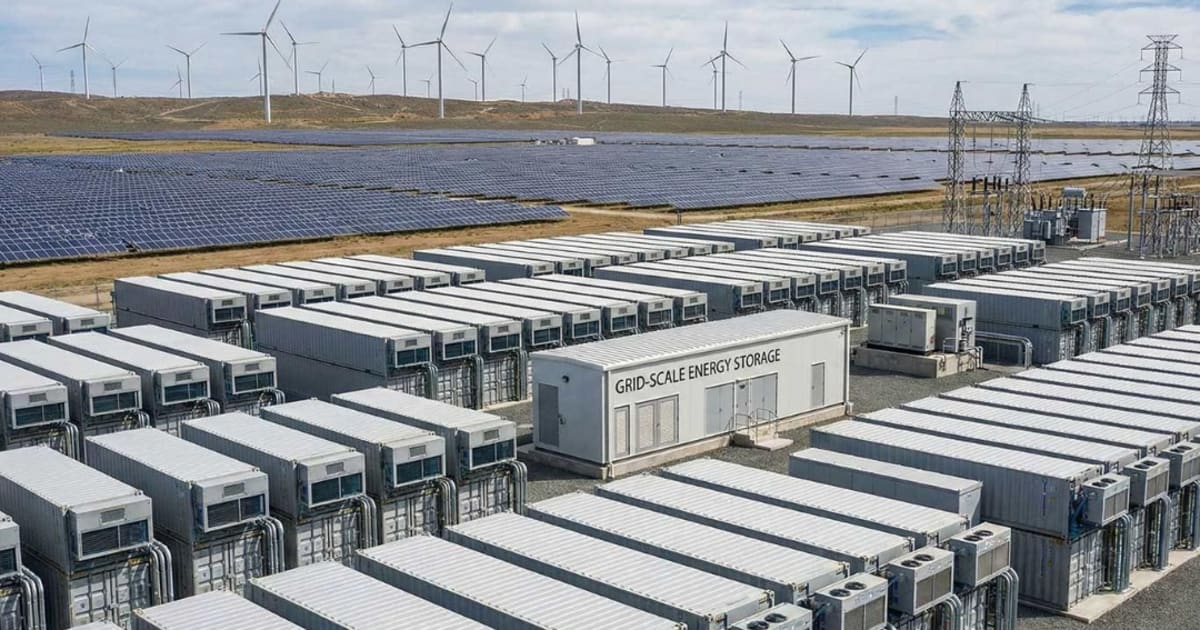
The financial case for Havells' entry into BESS is straightforward. India's BESS market for residential and C&I segments is expected to reach INR 10-12k crore by FY30, growing at more than 100 percent CAGR during the next three years.
That 100% CAGR figure reflects the unusual starting point of a market that is, by global standards, severely underpenetrated. India's total installed energy storage capacity stood at approximately 7.5 GWh as of early 2026, against a pipeline of over 140 GWh — the difference representing projects that have been approved or announced but not yet built. The storage capacity required to support India's renewable energy targets — 500 GW of clean power by 2030 — is vastly larger than what currently exists, which explains why growth projections for this segment are consistently the most aggressive in India's entire energy sector.
The drivers are structural and accelerating simultaneously. As solar and wind capacity grows, grid operators and commercial electricity consumers face increasing volatility — periods of surplus power and periods of shortage that battery storage can smooth. Rooftop solar installations, now being scaled under the PM Surya Ghar Yojana, need storage to be useful during non-peak generation hours. Industrial facilities with high electricity costs benefit economically from storing cheap off-peak or solar power for use during peak-tariff hours. And data centres — arguably the fastest-growing commercial electricity consumer in India right now — increasingly require on-site backup storage that goes beyond conventional diesel generators.
Havells can serve all three of these customer segments through its existing commercial relationships. The BESS product line extends the wallet share it captures per customer rather than requiring it to acquire entirely new customer relationships.
How This Fits Into Havells' Broader Renewable Strategy
The Pixii partnership is the latest in a sequence of deliberate moves Havells has been making to position itself as an energy transition company rather than purely a consumer electricals business.
Havells India had earlier signed a binding term sheet to invest Rs. 600 crore in Goldi Solar as part of Goldi's proposed fundraising round of up to INR 1,300 crore. Havells is to hold an 8.90%–9.24% stake in Goldi, depending on the size of the total primary round. The company also ranks among the listed manufacturers in the Ministry of New and Renewable Energy's latest revision of the Approved List of Models and Manufacturers for solar PV modules.
The Goldi Solar stake combined with the Pixii BESS partnership creates an integrated renewable energy product portfolio: solar generation through Goldi, and energy storage through Pixii's technology. A commercial or industrial customer buying a rooftop solar installation and storage system can potentially source both through Havells' distribution network — a bundled offering that no other large Indian electrical company currently provides at this breadth.
In May 2026, Havells reported a 14% YoY revenue growth driven by its cables and lighting divisions. The company recently expanded its manufacturing capability at the Ghiloth plant for the Lloyd range of air conditioners. Leadership also emphasized a 20% increase in R&D spend focused on energy-efficient industrial solutions.
The financial trajectory confirms the core business is healthy enough to absorb these strategic investments without financial stress. A company posting 14% revenue growth on its existing businesses, simultaneously increasing R&D spend by 20%, and now entering BESS is operating from a position of strength rather than necessity.
The Direct Business Synergies — Why BESS Makes Sense for Havells Specifically
Synergies with existing industrial switchgear and cable businesses are likely to enhance project-level margins. This observation captures something important about why the Pixii partnership is more strategically coherent for Havells than it might be for a typical Indian consumer goods company.
A BESS installation is not simply a battery — it requires switchgear to connect it to the electrical system, cables to carry power in and out, and protection equipment to ensure safe operation. Havells already manufactures and sells all of these components. Every BESS project it helps deploy becomes an opportunity to sell the surrounding electrical equipment that it already produces, generating higher per-project revenue than a standalone BESS sale would imply.
This is a pivot towards 'Energy transition as a service'. By partnering with Pixii, Havells avoids the high R&D cost of initial development while gaining immediate access to a proven, modular technology stack.
The technology licensing approach — accessing Pixii's proven platform rather than spending years and hundreds of crores building proprietary battery management systems — is also the right entry strategy for a company whose core competency is distribution and manufacturing rather than battery chemistry or power electronics research. Building storage technology from scratch would take a decade and enormous capital. Licensing proven technology and localising it is both faster and more capital-efficient.
The Competitive Landscape — Who Else Is In This Space
Havells is not entering a vacuum. The Indian BESS market already has participants ranging from pure-play energy storage companies to conglomerates with comparable strategic logic.
On the technology side, global players including Tesla's Megapack, CATL, BYD, and Fluence are all present in India's utility-scale storage segment. In the commercial and industrial segment — which is the initial target for the Havells-Pixii partnership — the competition is more fragmented, with a mix of international technology partners and Indian integrators serving an emerging market that hasn't yet consolidated around dominant brands.
Havells' competitive advantage in this fragmented landscape is exactly what drew Pixii to the partnership: distribution reach that no new entrant can quickly replicate. With a pan-India network of distributors, contractors, and retailers already buying Havells electrical products, the BESS sales pitch has a built-in distribution advantage. An electrical contractor who already buys Havells switchgear is a natural first customer for a Havells-branded BESS system that he can sell alongside solar installations to his existing clients.
The Make in India credential — which the phased roadmap explicitly commits to — also provides regulatory and procurement advantages in a market where government-backed institutional buyers increasingly favour domestically manufactured products.
Investor Implications — The Green Energy Premium for Havells
For investors, this adds a 'Green Energy' premium to a stock traditionally valued on retail consumption cycles. The BESS market is currently under-penetrated in India, providing a first-mover advantage among established electrical majors. The announcement is likely to trigger a re-rating of Havells' industrial segment.
The market's re-rating argument is valid over a medium-term horizon. Havells has historically been valued as a premium consumer electricals company — a category that commands good but not extraordinary multiples given its dependence on housing and consumer spending cycles. Adding a genuine energy transition vertical with infrastructure-like demand characteristics and faster structural growth changes the earnings quality story in ways that markets eventually price positively.
The caveat is execution timing. BESS revenue will not appear meaningfully in Havells' income statement in the next two to three quarters. The pilot phase needs to run, commercial models need to be validated, local manufacturing needs to be established, and customer adoption needs to build across the residential, commercial, and industrial segments. This is a FY28-FY29 revenue story at the earliest for material contribution to consolidated financials.
But the strategic positioning is sound, the market opportunity is large, and the partnership logic — Havells' distribution married to Pixii's technology — is genuinely complementary rather than opportunistic.
What to Watch — Key Milestones for the Havells-Pixii Partnership
Pilot installation announcements
The first milestone in the phased roadmap is pilot deployments. Watch for announcements of commercial and industrial customers where the first Havells-Pixii BESS systems go live. Early customer wins, and the segments they represent, will signal which part of the market the partnership is finding earliest traction in.
Manufacturing timeline. The commitment to local manufacturing is commercially significant for both Make in India compliance and cost competitiveness. Watch for announcements about which Havells manufacturing facility will be used for BESS localisation, and what the planned capacity and investment will be.
Goldi Solar Integration
With Havells holding equity in Goldi Solar alongside the Pixii BESS partnership, the natural question is whether the company begins offering integrated solar-plus-storage packages. A combined offering would materially strengthen its position in the rooftop solar segment.
Revenue disclosure
Havells currently does not break out its renewables vertical as a separate reporting segment. As the BESS and solar businesses grow, watch for whether management begins disclosing renewables revenue separately — a structural change that would allow investors to value the business on sum-of-parts rather than a single blended multiple.
FY27 R&D spend direction
Management indicated a 20% increase in R&D spend on energy-efficient industrial solutions. Watch whether subsequent disclosures indicate that a portion of this R&D investment is being directed specifically toward BESS technology adaptation and localisation.
The Bigger Picture — Havells' Evolution from FMEG to Energy Technology Company
The Pixii partnership is part of a broader identity shift at Havells that has been building for several years. The company that once defined itself primarily through consumer products — fans, switches, domestic wiring accessories — is deliberately repositioning itself as an energy infrastructure company with consumer roots.
The Goldi Solar stake, the BESS partnership, the expansion of the renewables SBU with dedicated leadership, and the 20% R&D spend increase toward energy-efficient industrial solutions collectively paint a picture of a company that is not simply adding products but evolving its strategic identity.
The Indian electrical goods market is itself evolving in the same direction. The distinction between "consumer electricals" and "energy infrastructure" is blurring as rooftop solar, EV charging, home energy management, and commercial storage become standard features of the buildings and facilities that Havells' existing distribution network already serves. A company that can supply the switch, the cable, the solar system, the battery, and the EV charger for a new building project is in a fundamentally stronger commercial position than one that can only supply a subset of those requirements.
That is the opportunity Havells is building toward with the Pixii partnership. The pilot phase will test the commercial model. The manufacturing phase will test the operational capability. And the market — growing at over 100% CAGR toward ₹10,000-12,000 crore by FY30 — will test the timing.
If all three work on schedule, the Havells of FY29 will look significantly different from the Havells of FY24 — and the investor who understood that transition early will have benefited from the re-rating that came with it.

Nikunjj Jhawar is a Chartered Accountant (CA) and Chartered Financial Analyst (CFA) with nearly two decades of experience in the financial services industry. Having worked with global institutions such as HSBC and Credit Suisse in investment-related roles, he brings deep expertise in finance and markets. He is the Founder of mangopeoplenews.com, where he focuses on making complex topics in finance, markets and business accessible and relevant to everyday readers.