

The Next AI Gold Rush Isn't Just About Chips. A New Infrastructure Supercycle Is Taking Shape
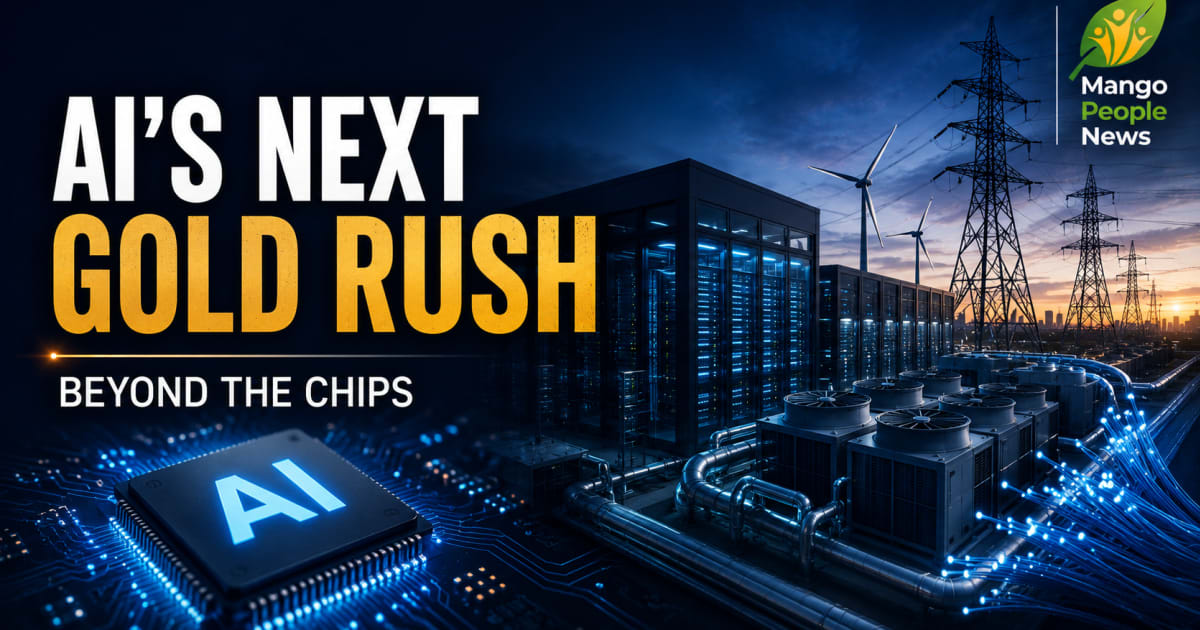
Artificial intelligence has already transformed the technology sector, but the next wave of wealth creation may come from a very different part of the economy.
While companies like Nvidia have dominated headlines, investors are increasingly turning their attention to a much broader opportunity—one that extends far beyond semiconductors. The global AI boom is triggering unprecedented spending on data centres, electricity networks, cooling systems, fibre connectivity and industrial infrastructure, creating what many analysts describe as a new investment supercycle.
With technology giants expected to invest nearly $1 trillion in AI infrastructure over the coming years, the ripple effects are likely to reach industries that have traditionally remained outside the spotlight.
AI Spending Is Entering A New Phase
The first phase of the AI revolution was driven by computing power. Chipmakers, cloud providers and AI software companies became the biggest beneficiaries as businesses rushed to build advanced AI models.
However, as AI adoption accelerates, the challenge is no longer just creating more powerful processors—it is building the physical infrastructure capable of supporting them.
Modern AI data centres require enormous amounts of electricity, specialised cooling systems, high-speed networking equipment and sophisticated construction capabilities. This shift is expanding the AI opportunity well beyond traditional technology companies.
The Real Winners May Be Infrastructure Providers
Analysts believe that the next beneficiaries of AI investment could include sectors that rarely feature in discussions about artificial intelligence. Among them are:
- Data centre developers
- Power generation companies
- Electricity transmission and distribution firms
- Cooling and HVAC manufacturers
- Optical fibre and networking equipment suppliers
- Industrial engineering companies
- Construction and infrastructure contractors
As hyperscale AI facilities become larger and more energy-intensive, demand across these industries is expected to rise sharply.
Electricity Has Become AI's Biggest Constraint
One of the most significant challenges facing AI expansion is access to reliable electricity.
Large AI data centres consume several times more power than conventional cloud computing facilities. Meeting this demand will require fresh investments in:
- Renewable energy
- Grid expansion
- Transmission infrastructure
- Energy storage
- Backup power systems
In many markets, power availability has become a critical factor in determining where new AI facilities can be built.
Data Centres Are Driving Massive Capital Expenditure
Global technology companies continue to announce multi-billion-dollar investments in AI infrastructure.
These projects involve much more than servers. Each new AI data centre requires:
- Land acquisition
- Civil construction
- Electrical equipment
- Advanced cooling technology
- Fibre connectivity
- Security systems
- Water management infrastructure
As a result, AI investment is increasingly benefiting industrial and infrastructure businesses alongside technology companies.
Networking Is Becoming Just As Important As Computing
Powerful AI models rely on thousands of graphics processors working together simultaneously.
Connecting these processors efficiently requires sophisticated networking equipment capable of transferring enormous amounts of data with minimal delay. This has created new growth opportunities for companies involved in:
- Optical networking
- High-speed switches
- Fibre infrastructure
- Semiconductor interconnect technologies
For many investors, networking is emerging as one of AI's most underappreciated growth segments.
Why Investors Are Calling It A Supercycle
Unlike previous technology upgrades, AI infrastructure cannot be built overnight.
The enormous scale of planned investments suggests demand could remain elevated for several years.
This is why market participants increasingly describe the trend as a structural supercycle rather than a short-term investment boom.
If AI adoption continues across industries, infrastructure spending may become more durable than spending on individual hardware products.
Opportunities Beyond Technology
The AI investment cycle is also creating opportunities in sectors that traditionally had little connection with software. Potential beneficiaries include:
- Electrical equipment manufacturers
- Industrial automation companies
- Power utilities
- Engineering and EPC firms
- Real estate developers specialising in data centres
- Cooling technology providers
These businesses may experience sustained demand as governments and technology companies continue expanding AI infrastructure.
Risks Investors Should Watch
Despite the long-term opportunity, several risks remain. These include:
- Slower-than-expected AI adoption
- High capital expenditure requirements
- Energy shortages
- Regulatory changes
- Supply chain constraints
- Valuation concerns after recent market rallies
Investors will therefore need to distinguish between companies benefiting from genuine long-term demand and those driven primarily by market enthusiasm.
Why It Matters
The AI revolution is gradually evolving from a software story into an infrastructure story.
As investment shifts towards building the physical backbone required to support artificial intelligence, companies outside the traditional technology ecosystem may emerge as some of the biggest long-term beneficiaries.
For investors, identifying these second-order winners could prove just as important as owning the companies developing AI itself.
The Bottom Line
The global AI race is no longer centred solely on designing faster chips.
It is now driving unprecedented investment across power, networking, construction, cooling systems and digital infrastructure.
With nearly $1 trillion expected to be deployed into AI infrastructure over the coming years, the next phase of the AI boom may be powered as much by electricity grids and data centres as by semiconductors.
For investors, the hidden opportunity may lie in the industries quietly enabling the AI revolution rather than those dominating the headlines today.

Nikunjj Jhawar is a Chartered Accountant (CA) and Chartered Financial Analyst (CFA) with nearly two decades of experience in the financial services industry. Having worked with global institutions such as HSBC and Credit Suisse in investment-related roles, he brings deep expertise in finance and markets. He is the Founder of mangopeoplenews.com, where he focuses on making complex topics in finance, markets and business accessible and relevant to everyday readers.


