Global Pension Funds Have Trillions to Invest. Budget Told Them India Is Ready to Take It - Here's How REITs and InvITs Actually Work

The Problem With How Foreign Money Comes to India
When a foreign investor wants to put money into India, they have limited options.
They can buy Indian stocks on the stock exchange. They can buy Indian government bonds. They can directly invest in a company by buying a large enough stake — what is called Foreign Direct Investment.
But what if they want something in between? Something that gives steady, predictable income — not the volatility of stocks — while also being backed by real, tangible Indian assets like a toll highway, an electricity transmission tower, or a Grade-A office building?
Until a few years ago, that option barely existed in India. And this gap meant billions of dollars of patient, long-term global capital — the kind that pension funds, insurance companies, and sovereign wealth funds manage — was simply not finding its way into Indian infrastructure.
REITs and InvITs are India's answer to that problem. And the government has just taken a significant step to make them dramatically more attractive to foreign investors.
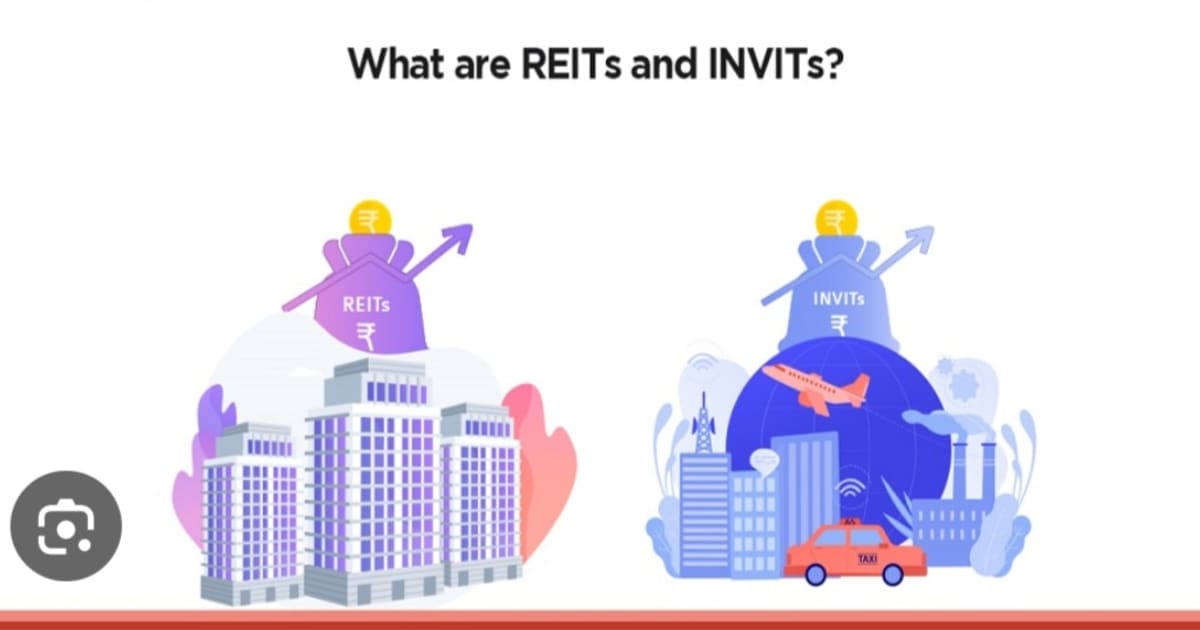
What Are REITs and InvITs — Explained Simply
REIT — Real Estate Investment Trust
A REIT is a structure that lets you invest in large, income-producing real estate — like Grade-A office buildings, shopping malls, or hotels — without having to buy the entire building yourself.
Think of it like a mutual fund, but instead of buying stocks, you are buying a small piece of large commercial properties. These properties generate rent every month. That rent income flows to you as the unit holder in the form of regular distributions — similar to dividends.
India currently has four listed REITs: Embassy Office Parks, Mindspace Business Parks, Brookfield India Real Estate Trust, and Nexus Select Trust. These own office campuses and malls that house companies like Goldman Sachs, JP Morgan, Microsoft, and hundreds of other large corporations.
InvIT — Infrastructure Investment Trust
An InvIT works exactly the same way — but instead of office buildings, it owns infrastructure assets. Think National Highways, power transmission lines, gas pipelines, and renewable energy plants.
India has several listed InvITs: India Grid Trust (electricity transmission), Powergrid Infrastructure Investment Trust, IRB Infrastructure Trust (toll highways), National Highways Infra Trust, and others.
When you buy units in an InvIT, you effectively own a small piece of a highway or power grid — and you receive your share of the toll collections or transmission charges as regular income.
Why These Are Attractive to Long-Term Investors
Both REITs and InvITs share three characteristics that make them particularly appealing to long-term, income-seeking investors:
Stable, predictable income. Rent from office buildings and toll collections from highways are not volatile. They come in every month, regardless of which company's stock is going up or down.
Real assets as backing. Unlike a stock that derives value from future earnings projections, REITs and InvITs own actual physical assets — land, buildings, roads, towers — that have clear, measurable value.
Mandatory distribution. By regulation, REITs and InvITs must distribute at least 90% of their net distributable cash flows to unit holders. This means the income they generate cannot be hoarded — it must flow to investors.
The Big Problem India's REITs and InvITs Have Been Facing
Despite all their advantages, India's REITs and InvITs have had a significant limitation that has kept foreign capital away.
The problem was technically complicated but practically very important. It had to do with how India taxed the income that flows from these instruments to investors — specifically, foreign investors.
The Tax Treaty Problem
India has signed tax treaties — called Double Taxation Avoidance Agreements or DTAAs — with dozens of countries. These treaties protect investors from paying tax twice on the same income — once in India and once in their home country.
But here is the catch: for many years, the income distributed by Indian REITs and InvITs to foreign investors could not clearly benefit from these tax treaties. The tax treatment was unclear and inconsistent. A pension fund in Canada or a sovereign wealth fund in Singapore could not be certain of exactly how much tax it would pay on its REIT distributions in India.
Uncertainty about taxes is one of the most powerful deterrents for institutional investors. If you are managing billions of dollars and you cannot model your after-tax return with confidence, you simply do not invest.
This tax uncertainty was the single biggest reason why global pension funds — which collectively manage tens of trillions of dollars and are specifically designed to invest in exactly the kinds of stable, long-term assets that REITs and InvITs represent — had not invested meaningfully in Indian REITs and InvITs.
What the Government Just Did — and Why It Matters
In the Union Budget 2025, the government made a specific and technically significant change: it clarified that the income distributed by Indian REITs and InvITs to foreign investors will be eligible for the benefits available under India's double tax avoidance agreements.
In plain language: the government told foreign investors — your income from Indian REITs and InvITs will be taxed at the lower, treaty rate, not at a higher domestic rate. You will not face double taxation. You can model your after-tax return with confidence.
This may sound like a small, technical change. But for the institutional investors India is trying to attract, it is significant.
To understand how significant, consider this: Canadian pension funds like CPPIB and OMERS, Norwegian pension funds, Abu Dhabi Investment Authority, GIC Singapore, and similar institutions collectively manage assets worth tens of trillions of dollars. A meaningful percentage of their portfolio is always seeking stable, long-term, inflation-protected income from real assets — exactly what Indian REITs and InvITs offer.
The tax clarity the government provided effectively removed the primary barrier between this enormous pool of patient capital and India's infrastructure and real estate sector.
Why India Needs This Foreign Capital So Badly
The Infrastructure Funding Gap
India has enormous infrastructure ambitions. Roads, railways, airports, power transmission, renewable energy — the government has committed to capital expenditure plans totalling many lakh crore rupees over the next several years.
But government budgets have limits. Banks have exposure limits. Domestic insurance companies and provident funds can only commit so much. India needs foreign capital to bridge the gap between what it wants to build and what it can currently afford.
The Perfect Match
REITs and InvITs are structurally perfect for this purpose.
For India: they allow infrastructure and real estate assets that are already built and operational to be "recycled" — sold to investors through the REIT or InvIT structure — generating fresh capital that can be used to build new infrastructure. This is called asset monetisation.
For foreign investors: they get stable, rupee-denominated income from real assets in one of the world's fastest-growing economies, with clear tax treatment and regulatory structure.
The match is almost perfect. The tax clarity the government provided was the missing piece that was preventing this match from being made at scale.
The Global Context — Why Now Is the Right Time
Global Appetite for Real Assets Is High
In a world of interest rate uncertainty and stock market volatility, institutional investors globally are seeking what is called "real asset exposure" — investments in physical things that generate predictable income and hold their value across economic cycles.
Infrastructure is particularly sought after. Roads generate toll income whether the economy is booming or in recession — people still commute to work, trucks still deliver goods, and goods still need to move. Office buildings in prime locations generate rents even in challenging economic periods if they house large, creditworthy corporate tenants.
India's infrastructure and Grade-A commercial real estate are exactly the assets that global pension funds and sovereign wealth funds are trying to own more of. The tax clarity the government provided could not have come at a better time.
The Yield Advantage
Indian REITs and InvITs typically offer distribution yields — the income you receive as a percentage of your investment — of 6% to 9% annually. This is significantly higher than what comparable infrastructure investments yield in developed markets, where yields are often 3% to 5%.
For a foreign investor borrowing money at a lower cost in their home country and investing in India at 6% to 9% yield, the return differential is attractive — especially when combined with potential appreciation in the value of the underlying assets.
What Has Actually Happened Since the Tax Clarification
The proof of whether a policy change works is in what happens after it is announced. And the early evidence from India's REITs and InvITs is positive.
Foreign investor interest in Indian REITs and InvITs has been growing. The total AUM managed by Indian InvITs has crossed significant milestones, with assets under management across the sector growing consistently.
Global infrastructure investors who had been watching India from the sidelines are now in active conversations about allocating capital. Several large international institutions have begun the process of regulatory approval and internal investment committee approvals — the precursor steps to actual capital deployment.
The government's asset monetisation programme — which includes plans to use InvIT structures to raise capital against operational infrastructure assets like national highways — has gained renewed momentum now that foreign investors have clear tax treatment on their potential investment.
What This Means for Ordinary Indian Investors
Domestic Mutual funds Are Already Increasing Allocation
SEBI recently reclassified REITs as equity-related instruments for mutual fund purposes. This means equity mutual funds can now include REITs and InvITs in their portfolio — something that was previously restricted.
As a result, domestic mutual funds have been increasing their allocation to REITs and InvITs. Over 25 fund houses now collectively hold approximately ₹55,000 crore in InvIT and REIT units — and this number has been growing consistently.
The Returns Have Been Strong
The Nifty REITs and InvITs index delivered a total return of 25.48% in FY26 — significantly outperforming the Nifty 50's 11.88% over the same period. This outperformance, during a period of broader market volatility, demonstrates the defensive and income-generating characteristics of these instruments.
Should You Invest in REITs or InvITs?
REITs and InvITs are best suited for investors who:
Want regular income, not just capital appreciation
Have a medium to long-term investment horizon (3-5 years minimum)
Want exposure to real estate or infrastructure without the complexity of direct property ownership
Are comfortable with the tax treatment of the distributions they receive
They are listed on stock exchanges and can be bought and sold like stocks — through your demat account, through any broker. Minimum investment is typically one unit, making them accessible to retail investors.
The Risk Side — Being Honest
Every investment has risks. REITs and InvITs are no exception.
Interest rate risk: When interest rates rise, the yields on REITs and InvITs become relatively less attractive compared to fixed-income alternatives like bonds and FDs. This can cause unit prices to fall.
Asset quality risk: If the underlying office building loses its tenants, or the highway sees lower-than-expected toll collections, the distribution to unit holders falls.
Currency risk for foreign investors: The income is in Indian rupees. If the rupee weakens against the dollar or euro, foreign investors receive less in their home currency when they convert their returns.
Liquidity risk: REITs and InvITs are less liquid than regular stocks. On some days, trading volumes are low, which means selling a large position quickly may require accepting a lower price.
None of these risks are insurmountable — but they must be understood before investing.
The Simple Summary
India has more than 90 lakh crore rupees worth of infrastructure that needs to be built over the next decade. REITs and InvITs are the financial structures that allow domestic and international investors to participate in funding that infrastructure — and earning stable, predictable income from it.
The Union Budget 2025's clarification that foreign investors will receive treaty-rate tax benefits on their REIT and InvIT income removed the biggest barrier between global pension funds and India's real assets.
The early evidence — growing foreign investor interest, strong domestic mutual fund inflows, and the Nifty REITs and InvITs index outperforming by a wide margin — suggests the policy is working.
For ordinary Indian investors, REITs and InvITs offer a way to earn 6-9% annual income from the roads, office parks, and power grids that form the backbone of India's economy — through a simple purchase in your demat account.
The global pension fund sitting in Canada or Norway is now looking at the same highway you drive to work on as a potential investment. Because of one Budget line item that clarified tax treatment, those two very different investors are now looking at the same Indian infrastructure asset — and both of them see something they want to own.

Nikunjj Jhawar is a Chartered Accountant (CA) and Chartered Financial Analyst (CFA) with nearly two decades of experience in the financial services industry. Having worked with global institutions such as HSBC and Credit Suisse in investment-related roles, he brings deep expertise in finance and markets. He is the Founder of mangopeoplenews.com, where he focuses on making complex topics in finance, markets and business accessible and relevant to everyday readers.