Modified UDAN 2.0: Can India's Regional Aviation Push Create The Next Infrastructure Boom?

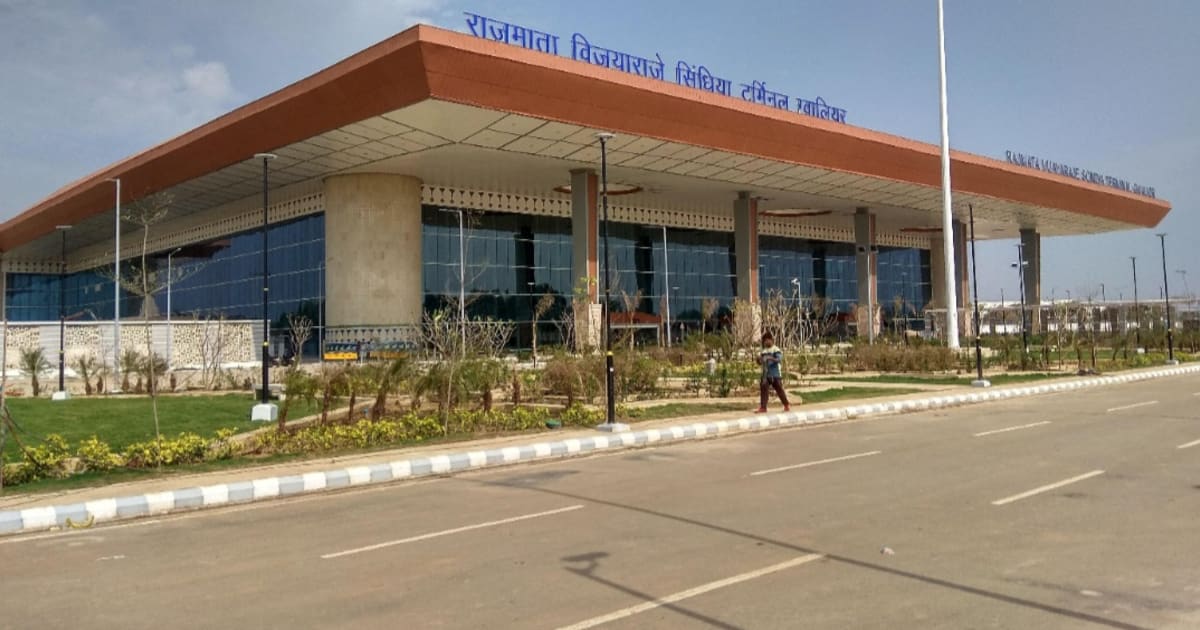
Nearly nine years after launching the UDAN (Ude Desh ka Aam Nagrik) programme, the Government has unveiled a significantly expanded version of the regional connectivity scheme, signalling that aviation infrastructure will remain a major pillar of India's long-term growth strategy.
Prime Minister Narendra Modi officially launched the Modified UDAN Scheme while inaugurating the new integrated terminal building at Jodhpur Airport, a project designed to strengthen connectivity across Rajasthan and support the next phase of regional aviation expansion.
Unlike the original programme, which primarily focused on making air travel affordable, the modified version aims to build a much larger aviation ecosystem by developing airports, expanding regional connectivity and creating fresh opportunities for tourism, logistics and economic development.
With an estimated ₹28,840 crore outlay over the next decade, the scheme represents one of India's biggest long-term investments in regional aviation infrastructure.
What Is The Modified UDAN Scheme?
The revamped programme seeks to deepen regional air connectivity while addressing many of the operational challenges that emerged during earlier phases of UDAN. The government plans to:
Develop nearly 100 additional airports and airstrips
Improve connectivity to smaller cities
Expand helicopter operations
Promote tourism-focused routes
Improve connectivity in hilly, remote and island regions
Encourage greater airline participation
Unlike metro airports, these smaller aviation hubs are expected to act as economic catalysts by improving access to underserved regions.
The scheme is also aligned with India's broader objective of becoming one of the world's largest civil aviation markets over the coming decade.
How Successful Has UDAN Been Since 2016?
When UDAN was launched in 2016, its objective was simple—make flying affordable for ordinary Indians while connecting cities that had little or no commercial air service. Over the past nine years, the programme has delivered meaningful progress. According to government data:
More than 600 regional routes have become operational.
Over 90 airports, heliports and water aerodromes have been connected under various phases.
Millions of passengers have benefited from subsidised regional flights.
Several previously unserved airports have resumed commercial operations.
The scheme has also helped stimulate tourism, business travel and regional economic activity in smaller cities.
However, not every route succeeded. Several airlines withdrew from unviable sectors because of low passenger demand, operational challenges and financial constraints.
These experiences have shaped the government's approach to UDAN 2.0.
Why Was A Modified Scheme Needed?
Despite its success, the original UDAN programme faced several structural challenges.
Many regional routes struggled because:
Passenger demand was lower than expected.
Airlines faced rising operating costs.
Airport infrastructure remained inadequate.
Aircraft availability was limited.
Weather-related disruptions affected smaller airports.
The revised programme attempts to address these issues by shifting the focus beyond fare subsidies towards long-term infrastructure creation. Instead of merely subsidising flights, the government now wants to build an ecosystem capable of sustaining regional aviation over the long run.
India's Aviation Market Is Growing Faster Than Most Major Economies
India is already the third-largest domestic aviation market globally. Passenger traffic has recovered strongly after the pandemic, supported by:
Rising disposable incomes.
Expansion of the middle class.
Rapid urbanisation.
Better airport infrastructure.
Growing tourism.
Increased business travel.
Industry estimates suggest India could require hundreds of additional commercial aircraft and dozens of new airports over the next decade to meet rising demand. Regional aviation is expected to account for a growing share of this expansion.
Why Regional Aviation Matters Beyond Air Travel
The benefits of regional connectivity extend well beyond aviation. Improved air links often trigger wider economic development by attracting investment and improving mobility. Regions connected through airports typically witness growth in Tourism, Hotels, Restaurants, Warehousing, Logistics, Healthcare, Education, Manufacturing and Real estate.
For businesses, faster connectivity reduces travel time and improves access to customers, suppliers and talent.
For state governments, airports often become anchors for broader infrastructure development.

Can Modified UDAN 2.0 Transform India's Regional Aviation?
The original UDAN scheme proved that affordable air travel could connect cities that had long remained outside India's commercial aviation network. However, the next phase is about much more than subsidised tickets.
Modified UDAN aims to create a self-sustaining regional aviation ecosystem where airports become engines of economic activity rather than standalone transport facilities. Its success will ultimately depend on three critical factors:
Whether airlines can operate routes profitably after government support tapers.
Whether passenger demand grows consistently in Tier-II and Tier-III cities.
Whether airport infrastructure is developed quickly enough to keep pace with rising traffic.
If these conditions are met, the scheme could fundamentally reshape India's aviation landscape over the next decade.
Challenges That Could Slow The Programme
Despite its ambitious vision, several hurdles remain.
Airline Profitability
Regional routes generally have lower passenger volumes than metro routes. Sustaining these services will require careful route planning, efficient aircraft utilisation and continued growth in local demand.
Airport Readiness
Many smaller airports still require better navigation systems, runway upgrades, night-landing facilities and terminal infrastructure before they can support regular commercial operations.
Fleet Availability
Regional aviation depends on smaller aircraft such as ATRs and similar turboprops. Limited fleet availability could slow expansion if airlines cannot induct aircraft quickly enough.
Operational Costs
High aviation turbine fuel (ATF) prices, airport charges and maintenance costs remain significant challenges, especially for regional operators.
Execution Across States
Since airport development often involves coordination between the Centre, state governments and local authorities, delays in land acquisition or clearances could affect implementation timelines.
Why This Matters For India's Infrastructure Story
Modified UDAN should not be viewed in isolation. It complements several large national infrastructure initiatives, including Bharatmala highway programme, Dedicated Freight Corridors, Sagarmala port development High-speed rail & Vande Bharat expansion and PM Gati Shakti National Master Plan.
Together, these projects are creating an integrated multimodal transport network that aims to reduce logistics costs, improve connectivity and support economic growth.
Regional aviation fills a critical gap by connecting smaller cities that cannot be efficiently served by rail or road alone.

Investment Perspective: Which Sectors Could Benefit Most?
From an investor's perspective, the biggest beneficiaries may emerge across multiple industries rather than aviation alone.
Highest Potential Beneficiaries
Airlines: IndiGo, SpiceJet (if its turnaround continues).
Airport Operators: GMR Airports and Adani Airports.
Construction & EPC: Larsen & Toubro, NCC, PSP Projects, Ahluwalia Contracts, KEC International, Kalpataru Projects.
Hotels: Indian Hotels, Lemon Tree Hotels, Chalet Hotels, EIH, Samhi Hotels.
Travel Ecosystem: Airport retail, logistics, ground handling, aviation fuel suppliers and cargo operators.
The broader impact is likely to unfold gradually over several years rather than immediately after the scheme's launch.
Modified UDAN 2.0: The Bottom Line
India's aviation sector has already become one of the fastest-growing in the world, but much of that growth has been concentrated around major metropolitan airports.
The Modified UDAN Scheme seeks to change that by taking commercial aviation deeper into smaller cities and underserved regions. With an outlay of nearly ₹28,840 crore, plans to operationalise around 100 additional airports and airstrips, and a strong focus on regional connectivity, tourism and infrastructure development, the programme could become one of the most important aviation initiatives of the coming decade.
If implemented effectively, the benefits will extend well beyond airlines—supporting airports, construction companies, hospitality businesses, logistics operators and regional economies across India.
For investors, the opportunity lies not just in aviation stocks but across the wider infrastructure ecosystem that stands to gain from India's next phase of connectivity-led growth.

Nikunjj Jhawar is a Chartered Accountant (CA) and Chartered Financial Analyst (CFA) with nearly two decades of experience in the financial services industry. Having worked with global institutions such as HSBC and Credit Suisse in investment-related roles, he brings deep expertise in finance and markets. He is the Founder of mangopeoplenews.com, where he focuses on making complex topics in finance, markets and business accessible and relevant to everyday readers.