Mark Zuckerberg Just Made Mukesh Ambani Even More Powerful — and in Doing So, Set Up India's Most Consequential Business Battle Yet

There is a line in Mukesh Ambani's statement about the Meta data centre deal that deserves more attention than it received. "Building India's first built-to-suit AI data centre for a global technology leader of Meta's scale," Ambani said, "demonstrates India's readiness to be at the forefront of the global AI revolution."
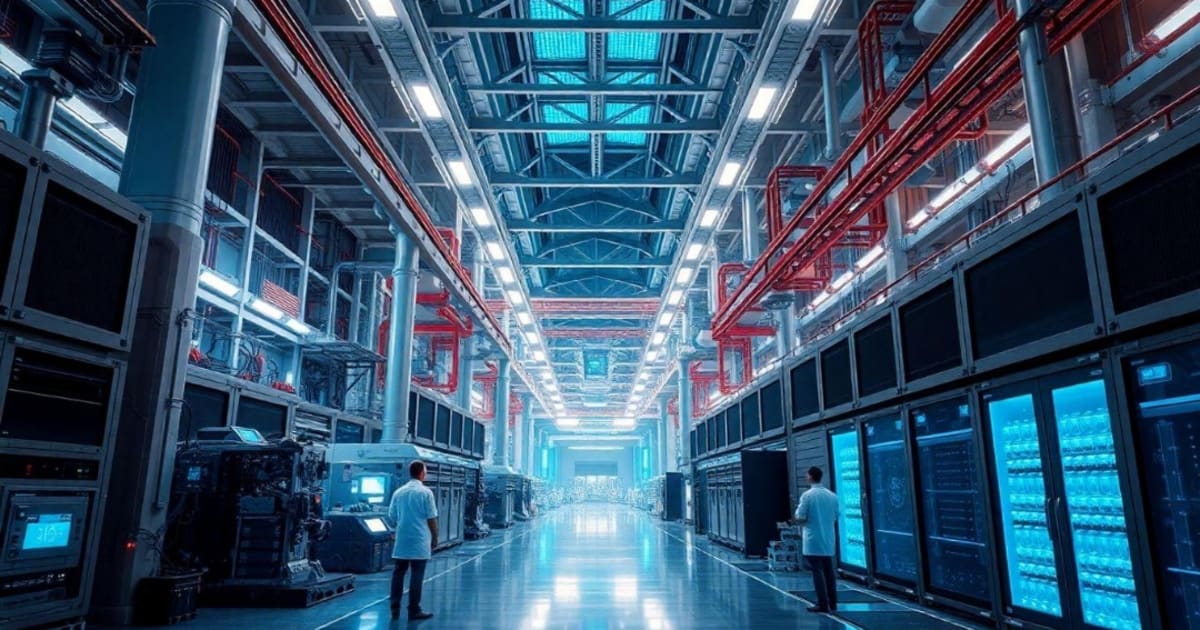
The word "first" is doing a lot of work in that sentence. Meta's 168-megawatt facility in Jamnagar — to be built by Reliance Industries and leased to Meta when complete in approximately two years — is the first such built-to-suit AI data centre that Meta has commissioned in India. But it is also, implicitly, the first in a sequence. And the entity positioned to build the sequence is Reliance.
This matters not just as a corporate transaction, but as a signal about how India's digital infrastructure landscape is being divided — and about the rivalry between two conglomerates that is now extending from telecom and ports into the foundational layer of the AI economy.
THE META-RELIANCE RELATIONSHIP: OLDER THAN MOST PEOPLE REALISE
The Jamnagar data centre is not the beginning of the Meta-Reliance relationship. It is its latest, and most capital-intensive, expression. In 2020, at a moment when Reliance was navigating enormous debt and looking to restructure its digital assets, Meta invested $5.7 billion in Jio Platforms — the holding company for Reliance's digital businesses — acquiring a 9.99% stake. That investment, made alongside similar ones from Google and a series of private equity firms, was the financial pivot that transformed Jio from a heavily indebted telecom startup into a well-capitalised digital platform.
In the years following, WhatsApp deepened its integration with Reliance's Jio ecosystem and with JioMart — the e-commerce service that allows Indian consumers to order from local kiranas and have goods delivered through WhatsApp conversations. The experiment was never quite the commercial success either party had hoped for, but it established the operational relationship and mutual trust that would eventually lead to something larger.
Last year, Meta and Reliance formed a joint venture — split 30% to Meta and 70% to Reliance — with an initial investment of ₹855 crore, focused specifically on building AI platforms and tools for Indian enterprises. The Jamnagar data centre deal this June is the physical infrastructure that sits beneath that AI platform ambition. The JV needs compute. Reliance provides it.
Now add Meta Compute — the internal Meta initiative to lease excess AI infrastructure capacity to enterprise clients — and the full picture emerges. Meta has spent hundreds of billions of dollars building AI infrastructure for its own products. Rather than leaving that capacity idle during off-peak periods, it plans to monetise the surplus by selling compute access to external clients. Reliance, as Meta's preferred Indian infrastructure partner, is positioned to be a central node in that ecosystem — building the physical capacity, hosting Meta's facility, and potentially distributing Meta Compute services to Indian enterprises through Jio's commercial relationships.
THE ADANI COUNTER-MOVE: GOOGLE AS THE ANSWER
If Reliance is positioning itself as Meta's preferred Indian AI infrastructure partner, Adani Group has done something structurally similar on the other side — building an AI data centre empire with Alphabet's Google as its anchor technology relationship.
Adani Group has committed $100 billion to its data centre business through 2030. The company's partnership with Google — announced as part of the broader wave of hyperscaler commitments to India — gives it both a customer anchor and a technology credibility signal for the institutional investors and sovereign wealth funds that will eventually fund its enormous capex programme. The EdgeConnex JV, Adani's dedicated data centre subsidiary, is targeting hyperscale campuses across Maharashtra and Andhra Pradesh, with the Visakhapatnam facility — where Google has signed on as an anchor customer — as the flagship.
The emerging structure looks like this: Reliance and Meta on one side, Adani and Google on the other. India's two largest private sector conglomerates, each aligned with a different American technology giant, each building enormous physical AI infrastructure that the other's partner depends on. The Ambani-Adani rivalry — which has already played out in ports, airports, renewable energy, retail, and telecom — is now being joined in earnest in the most consequential infrastructure category of the decade.
WHAT META COMPUTE MEANS FOR INDIA
The internal Meta initiative to commercialise its AI infrastructure is genuinely novel in a way that most commentary has not fully captured.
Amazon, Microsoft, and Google built cloud businesses from the ground up — as primary strategic priorities rather than as ways to monetise excess capacity from a core advertising business. Meta is doing something different: it is converting what was purely a cost centre — the GPU clusters and data centres needed to run its own AI products — into a revenue source by offering the same infrastructure to paying enterprise customers.
The competitive question is significant. AWS, Azure, and Google Cloud have spent two decades building enterprise cloud businesses, with the sales organisations, compliance certifications, developer ecosystems, and customer support infrastructure that enterprise buyers require. Meta Compute is entering this market late, with an enormous infrastructure asset but without the enterprise relationships that make cloud businesses sticky. Whether it can convert raw compute capacity into durable enterprise revenue against established incumbents is not obvious.
For India specifically, Meta Compute's ambitions are interesting because they intersect with the growing demand from Indian enterprises and GCCs for AI compute that doesn't sit on foreign-owned infrastructure. If Meta's physical facility is in India, built and operated by a Reliance subsidiary, there may be an argument — depending on how the legal and data structures are designed — that compute purchased through that facility is domestically hosted in a way that satisfies some Indian data sovereignty requirements. That argument would need to be tested against specific regulatory requirements, but it is the kind of commercial differentiation that would make Meta Compute appealing to clients that cannot use US-domiciled cloud services for sensitive workloads.
WHAT CHANGES FOR HOMEGROWN STARTUPS AND BANKS
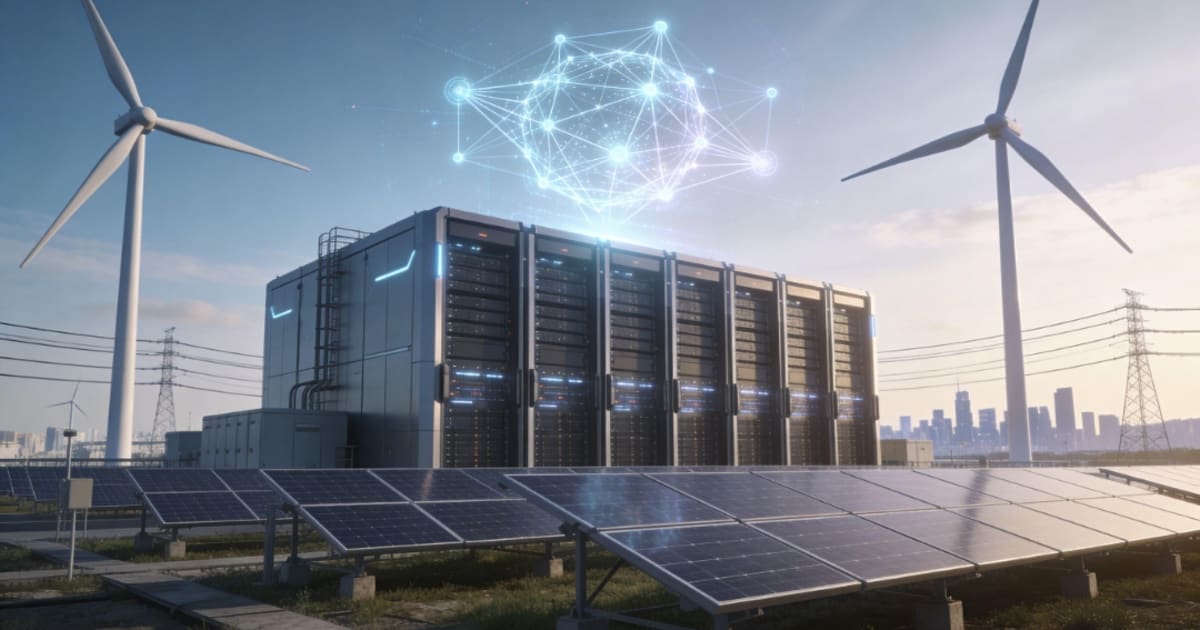
The arrival of Meta-backed AI infrastructure at Reliance scale, alongside Google-powered Adani capacity, raises a question that Indian startups and public sector banks are beginning to take seriously: where, in this landscape, do they go to run their AI workloads — and at what cost?
Paytm, PhonePe, IndiaMart, Meesho, and dozens of other Indian startups currently run large portions of their infrastructure on AWS, Azure, or Google Cloud at rates determined by US-headquartered cloud providers. The emergence of Reliance and Adani as domestic alternatives — potentially offering sovereign, physically-in-India compute at competitive prices — gives Indian companies a genuine alternative they have never had before. Whether that alternative is price-competitive, enterprise-ready, and technically capable of meeting the requirements of large-scale AI workloads will determine how much of India's cloud spend eventually migrates toward domestic providers.
Public sector banks, which face strict RBI requirements around data localisation and have been navigating the compliance complexity of cloud adoption for several years, could be the most natural early customers for domestically-built, conglomerate-operated AI infrastructure. An AI data centre in Jamnagar operated by Reliance and powered by Meta's infrastructure is, by any reasonable definition, Indian-soil computing — which removes one of the most persistent barriers that has kept PSU banks from moving workloads to cloud at pace.
THE KUNAL SHAH WILDCARD
One more thread runs through this entire story, and it arrived before the data centre deal did.
Meta's $900 million investment in CRED — announced simultaneously with the news of Kunal Shah becoming CEO of WhatsApp globally — is not an unrelated transaction. WhatsApp, with 500 million active users in India and more than 100 million business accounts globally, is Meta's most important platform for commerce and payments in emerging markets. CRED, with 17 million high-net-worth Indian users and a growing financial services stack, is the kind of premium distribution partner that helps WhatsApp move from messaging toward a genuine payments and commerce platform.
Shah's appointment as WhatsApp's global CEO is, among other things, a bet that an Indian founder who deeply understands Indian consumer behaviour can take WhatsApp's India model — which has never fully converted its distribution advantage into the kind of payments and commerce revenue WeChat generates in China — and finally unlock it. The CRED stake gives WhatsApp an immediate bridge to India's highest-value consumer cohort. The Reliance data centre gives it the physical infrastructure to run Indian AI services domestically. The JV gives it a product development partner with deep enterprise relationships.
Put it all together, and what Zuckerberg is building in India is not simply an advertising-revenue extension or a messaging platform. It is a full-stack play: infrastructure, commerce, payments, AI, and an enterprise software layer — all built in partnership with the conglomerate that has the deepest distribution, the most extensive retail presence, and the largest telecom subscriber base in the country.
The question is whether Gautam Adani, armed with $100 billion and a Google partnership, can build something comparably comprehensive on the other side. India has been the site of several major corporate rivalries over the past decade. The one now taking shape between Reliance-Meta and Adani-Google may be the most consequential of all — because the prize isn't market share in any single product category. It's control of the infrastructure layer on which India's entire AI economy will run.

Nikunjj Jhawar is a Chartered Accountant (CA) and Chartered Financial Analyst (CFA) with nearly two decades of experience in the financial services industry. Having worked with global institutions such as HSBC and Credit Suisse in investment-related roles, he brings deep expertise in finance and markets. He is the Founder of mangopeoplenews.com, where he focuses on making complex topics in finance, markets and business accessible and relevant to everyday readers.