

India's Plus-Size Fashion Boom: How an Ignored Market Is Becoming Retail's Next Growth Engine
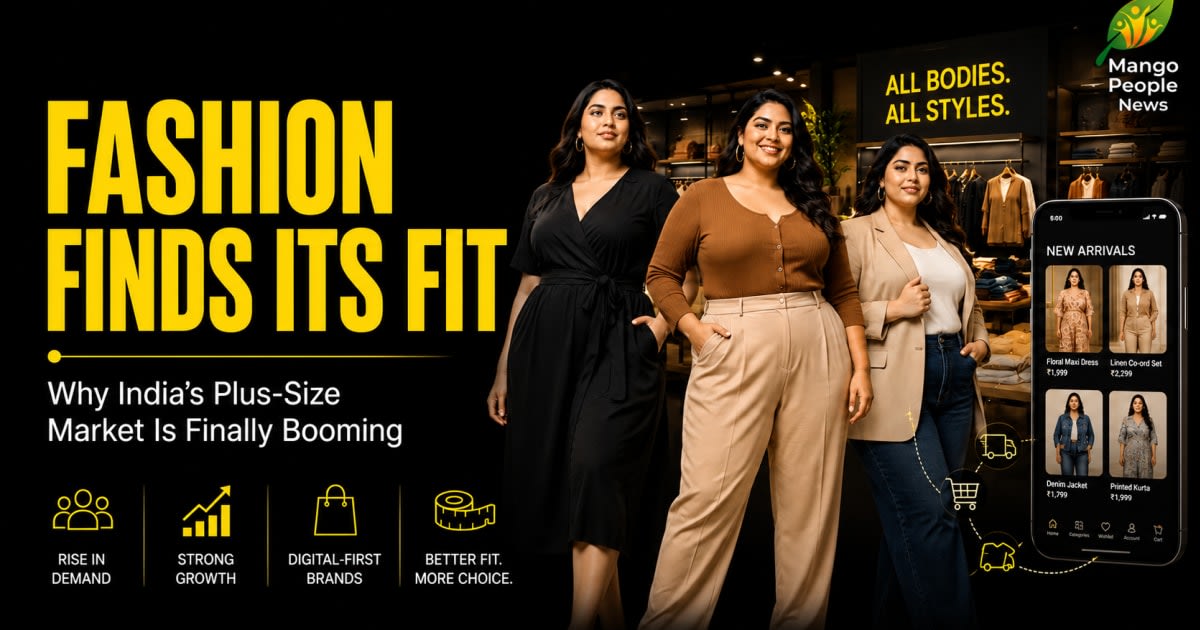
A Fashion Category That Retailers Overlooked Is Finally Getting the Attention It Deserves
For years, India's fashion industry largely focused on standard clothing sizes, leaving millions of consumers with limited choices. Those looking for extended sizes often had to settle for outdated designs, restricted collections or expensive custom tailoring.
That gap is now turning into one of the country's most promising retail opportunities.
Driven by changing consumer expectations, greater awareness around body inclusivity and the rapid expansion of ecommerce, fashion brands are beginning to treat plus-size apparel as a mainstream business segment rather than a niche category. Companies are investing in better product design, dedicated collections and technology that helps improve fit while reducing product returns. This shift is creating a new avenue for growth in one of India's fastest-evolving consumer markets.
India's Apparel Industry Is Large—But Not Everyone Has Been Served Equally
India is among the world's largest apparel markets, supported by a young population, rising incomes and increasing internet penetration. Industry estimates suggest the domestic apparel market could exceed US$193 billion by FY30, making it one of the biggest retail opportunities in the country. Yet despite this growth, plus-size consumers remained underserved for years.
Most brands simply increased garment dimensions from standard patterns instead of redesigning clothes specifically for different body shapes. The result was clothing that often failed to deliver the right fit, comfort or style.
As consumer expectations evolved, this approach became increasingly difficult to sustain.
Why Brands Stayed Away for So Long
Ignoring the plus-size segment was not always about demand—it was often about economics.
Creating extended-size collections requires fresh design patterns, additional sampling, more complex inventory planning and higher production costs. Retailers also worried that a wider size range would increase unsold inventory and reduce operating margins.
Fashion businesses traditionally depend on accurate demand forecasting. Every additional size multiplies inventory complexity, making merchandising and supply-chain planning significantly more challenging.
As a result, many brands chose to limit their size offerings rather than invest in specialised product development.
Technology Is Changing the Business Equation
The economics of the category are beginning to improve. Modern Fashion companies increasingly rely on customer data, demand forecasting and faster manufacturing cycles to understand which products sell, which sizes move faster and where inventory should be allocated.
Instead of producing large quantities months in advance, several digital-first brands now launch smaller collections, analyse customer feedback and replenish successful products quickly.
This approach reduces inventory risk while allowing brands to serve a wider range of consumers more efficiently.
New-Age Fashion Brands Are Leading the Shift
Much of the momentum is coming from digitally native fashion companies.
Rather than treating plus-size clothing as a separate category, these brands are incorporating inclusive sizing into their broader product strategy.
Several companies are redesigning garments specifically for different body proportions instead of merely enlarging existing patterns. Others are using customer feedback and return data to refine future collections.
Established retailers are also expanding their offerings through dedicated labels aimed at consumers seeking stylish extended-size apparel.
The focus is gradually shifting from simply offering larger sizes to delivering better fit, design and shopping experience.
Business Opportunity Extends Beyond Clothing
The opportunity is not limited to selling more garments. Consumers purchasing apparel are also likely to spend on footwear, accessories, beauty products and lifestyle categories. This creates opportunities for higher customer lifetime value and stronger brand loyalty.
Brands that successfully address this market can also benefit from repeat purchases, as satisfied customers are more likely to return when they find clothing that consistently fits well.
In an increasingly competitive fashion industry, customer retention has become just as important as customer acquisition.
Competition Is Intensifying
The market is no longer dominated by a handful of specialist brands. Large retailers, ecommerce marketplaces and D2C companies are all increasing their focus on inclusive fashion. Key participants include:
Myntra through its Sztori label.
Westside with brands such as Gia and Diza.
Emerging digital-first brands including Virgio and NEWME.
Independent plus-size specialists catering to niche audiences.
Competition is likely to intensify as brands recognise the commercial potential of this previously underserved consumer segment.
Growth Drivers
Several structural trends are supporting the rise of India's plus-size fashion market:
Growing acceptance of body diversity.
Rapid growth of online fashion retail.
Data-driven merchandising and inventory planning.
Faster supply chains enabling smaller production runs.
Rising disposable incomes.
Increasing demand for fashionable everyday wear rather than basic essentials.
Together, these factors are transforming inclusive fashion from a social conversation into a commercially attractive business category.
Challenges Still Remain
Despite growing momentum, brands continue to face several hurdles.
Inventory Management
Maintaining a broader range of sizes increases inventory complexity and forecasting challenges.
Product Development
Extended-size garments require dedicated design, testing and fit validation rather than simple size scaling.
Pricing Pressure
Additional manufacturing complexity can increase production costs, making competitive pricing more difficult.
Consumer Expectations
Customers increasingly expect the same quality, variety and style available in standard-size collections.
Meeting these expectations consistently will require continuous investment in product innovation.
Bottom Line
India's plus-size fashion market is moving beyond token representation to become a meaningful commercial opportunity. Rising consumer demand, advances in ecommerce and data-driven merchandising are encouraging brands to rethink how they design, manufacture and sell apparel. While challenges around inventory, product development and pricing remain, companies that solve these problems effectively could build lasting competitive advantages in one of India's fastest-growing retail segments. The winners are likely to be those that view inclusive fashion not as a niche offering, but as a core part of their long-term growth strategy.

Nikunjj Jhawar is a Chartered Accountant (CA) and Chartered Financial Analyst (CFA) with nearly two decades of experience in the financial services industry. Having worked with global institutions such as HSBC and Credit Suisse in investment-related roles, he brings deep expertise in finance and markets. He is the Founder of mangopeoplenews.com, where he focuses on making complex topics in finance, markets and business accessible and relevant to everyday readers.

