Corporate Civil War at Bombay House: Noel Tata Challenges Chandrasekaran’s 5-Year Extension and Fights to Block Tata Sons IPO

A high-stakes power struggle has erupted inside Bombay House, the historic headquarters of the $165-billion salt-to-software Tata conglomerate.
In a stormy board meeting that has drawn comparisons to the boardroom battle of 2016, a sharp divide opened between Tata Sons —the principal holding company of the group—and its 66% majority owner, the philanthropic Tata Trusts.
The crisis was triggered by two monumental decisions taken by the Tata Sons board by a 4-1 majority: granting incumbent Executive Chairman N Chandrasekaran a fresh five-year term (extending his tenure through February 2032) and initiating steps to comply with the Reserve Bank of India’s (RBI) mandatory listing norms for Upper-Layer shadow banks.
Tata Trusts Chairman Noel Tata vehemently opposed both resolutions, casting the sole dissenting vote and subsequently issuing an explosive statement declaring Chandrasekaran’s reappointment a "legal nullity" and unconstitutional under the Articles of Association (AoA) of Tata Sons.
At the same time, Noel Tata launched an aggressive push to keep the ₹2 lakh-crore holding company private, warning that a public listing would permanently dismantle the century-old, philanthropic character of the Tata operating model.
Here is an in-depth breakdown of the Bombay House clash, the legal disputes surrounding trust veto powers, the RBI’s regulatory ultimatum, and what this boardroom confrontation means for India’s most revered business empire.
The Trigger: A 4-1 Board Vote and the Legal Nullity Claim
The confrontation came out into the open after the Tata Sons board convened following the RBI's formal rejection of the company's application to surrender its Core Investment Company (CIC) registration.
Facing the central bank's directive to comply with Upper-Layer Non-Banking Financial Company (NBFC) frameworks—which require mandatory public listings for entities of this scale—the board took decisive steps:
The Reappointment Resolution: The board’s Nomination and Remuneration Committee (NRC) asked Chandrasekaran to reconsider his previous August 12 decision not to seek an extension. Four directors voted in favor of granting him a third consecutive five-year term starting February 2027; Noel Tata voted against.
The Listing Resolution: The board resolved to initiate formal steps to comply with RBI guidelines and prepare for an eventual public listing, while engaging with stakeholders.
Shortly after the meeting adjourned, Tata Trusts issued a public rejoinder. The Trusts asserted that under Tata Sons’ Articles of Association, any key board resolution—including the appointment or reappointment of the Executive Chairman—mandates the affirmative "assenting vote" of a majority of the Trust-nominated directors.
Because Noel Tata voted against the move, the Trusts claimed the decision lacked legal standing.
The Split Among Trustees: Casting Votes and Veto Questions
The conflict is complicated by internal fault lines among the Trust nominees themselves.
Currently, only two Tata Trusts nominees sit on the Tata Sons board: Noel Tata and TVS Motor Chairman Venu Srinivasan. During the board proceedings, the two nominees canceled each other out:
On the listing proposal, Srinivasan voted in favor while Noel voted against. Chandrasekaran exercised his casting vote as chairman to clear the proposal.
On the reappointment of Chandrasekaran, Srinivasan again backed the extension while Noel opposed. Because Chandrasekaran could not preside over his own term extension, independent director Harish Manwani was called to chair the session and used his casting vote to break the tie in favor of Chandrasekaran.
The Dispute Over the "Trust Veto"
Tata Trusts contends that Noel Tata submitted a formal legal opinion authored by former Chief Justice of India D.Y. Chandrachud, arguing that a dissenting vote by a Trust nominee acts as an effective veto that invalidates board majorities on reserved matters.
Conversely, legal counsels advising the Tata Sons board maintain that the Companies Act does not empower an individual nominee to override board majorities or casting votes, noting that neither the Companies Act nor standard corporate governance allows a unilateral veto when fellow trust nominees vote in the affirmative.
Furthermore, cracks have appeared within Tata Trusts itself. Several trustees, including Vice Chairman Vijay Singh, clarified that positions articulated by Noel Tata should not be presumed to represent the collective, unified stance of all trustees, stating that the broader trustee body was neither fully consulted nor unanimous on the public statements issued.
The Core Ideological Battle: Why Noel Tata Fights to Keep Tata Sons Unlisted
Beyond executive appointments, the primary battle centers on whether Tata Sons should ever become a publicly traded stock on Dalal Street.
The Reserve Bank of India classified Tata Sons as an Upper-Layer NBFC due to its massive asset footprint. While Tata Sons repaid borrowings and redeemed preference shares worth over ₹20,000 crore to eliminate public debt, the central bank declined its request to surrender shadow-banking registration, effectively insisting on public listing compliance.
"Saving the Tata Model"
Noel Tata has argued that a public listing would irrevocably compromise the group’s philanthropic architecture:
Public Good vs. Quarterly Demands: Tata Sons is 66% owned by charitable trusts whose dividend income funds hospitals, universities, cancer research, and national development. Noel argued that public market institutional investors prioritize short-term quarterly financial returns over long-term social mandates.
Impairing Strategic Freedom: A listed holding company would face severe market resistance when deploying billions into high-risk, capital-intensive bets whose returns lie 10 to 15 years away—such as semiconductor wafer fabrication in Dholera, EV battery gigafactories, and the turnaround of Air India.
Alternative Structural Paths: Noel Tata has urged the group to engage directly with the RBI to explore structural alternatives—such as corporate restructuring or seeking a multi-year compliance runway of at least three years—to meet regulatory mandates without undergoing an IPO.
The AGM Deadlock and the Threat of Legal Action
The battle now moves from the boardroom to the shareholders' assembly. For Chandrasekaran to formally continue executing his five-year extension, his reappointment as a director must be ratified by shareholders at the overdue Annual General Meeting (AGM) of Tata Sons. This presents an unprecedented governance logjam:
The Quorum Paralysis: Majority voting control lies with the Sir Dorabji Tata Trust and the Sir Ratan Tata Trust. However, the Sir Ratan Tata Trust is currently barred by the Maharashtra Charity Commissioner from making operational decisions, leaving the upcoming AGM deferred due to a lack of quorum.
Potential NCLT Adjudication: With the board of directors and the majority shareholder taking opposing positions, corporate governance experts warn that the dispute could land before the National Company Law Tribunal (NCLT), reviving legal warfare over minority rights, AoA veto interpretations, and trustee governance.
The Bottom Line
The clash between N Chandrasekaran and Noel Tata is not merely corporate drama—it is a struggle over the identity of India's most influential conglomerate.
On one side stands the operating board, seeking stability, regulatory compliance with the RBI, and capital market readiness under a proven corporate leader. On the other stands Tata Trusts, fighting to protect an unlisted philanthropic model that has insulated the group from Dalal Street's short-term pressures for over a century.
How Bombay House resolves this divide will shape not only the future of Tata Sons, but the broader governance benchmark for corporate India.
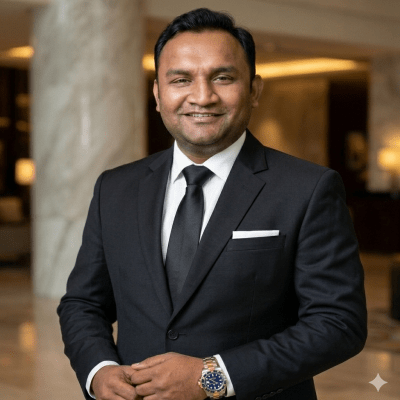
Nikunjj Jhawar is a Chartered Accountant (CA) and Chartered Financial Analyst (CFA) with nearly two decades of experience in the financial services industry. Having worked with global institutions such as HSBC and Credit Suisse in investment-related roles, he brings deep expertise in finance and markets. He is the Founder of mangopeoplenews.com, where he focuses on making complex topics in finance, markets and business accessible and relevant to everyday readers.